Residential snow removal
Wake up to a clear driveway
Keep your driveway and walkways clear all winter long. Driveways, walks and steps cleared before the morning drive, every storm, without a phone call — no more shoveling in the freezing cold.
One field to start. No account, no sales call — we come back with a real number.
What a residential visit includes
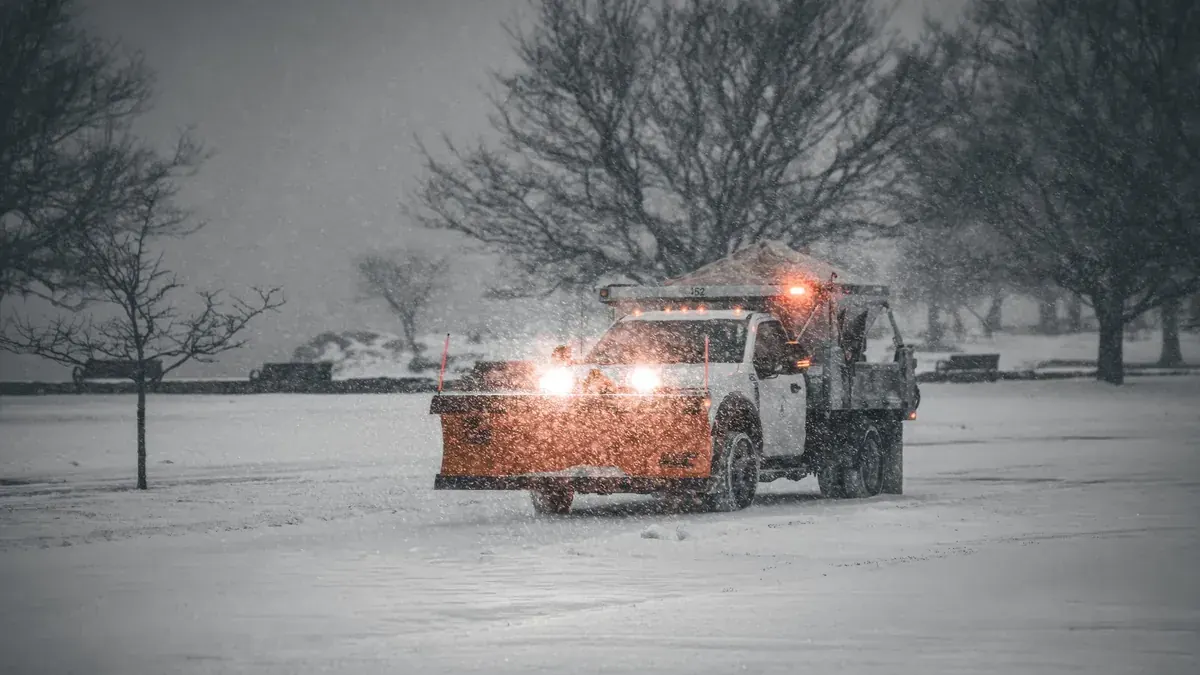
Every visit covers the whole property, not just the slab in front of the garage. Crews clear the driveway, cut back the berm the city plow leaves across your apron, hand-shovel the front walk and steps, and treat for ice where the plan calls for it.
Residential routes are built backward from the morning commute, so overnight snow is cleared in the small hours. Multi-day storms run on rotation rather than one heroic dig at the end.
- Driveway plowed edge to edge, including the apron berm
- Front walk, side walk and steps hand-shoveled
- Salt or calibrated ice melt on request, or standing in the plan
- 2″ trigger standard; 1″ for steep drives and early commutes
- Stakes set at the edges during the fall walk so turf survives
- Every visit GPS-logged with times and services
Two ways to pay
Per push — you pay only on the storms we come out. Sensible for a mild winter, a second property, or lighter needs.
Seasonal — one fixed number for unlimited visits from November 1 – April 15. A 90″ winter costs the same as a 30″ one, which is how most households budget a winter here.
Who this is for
Commuters who cannot risk being boxed in, anyone who should not be lifting wet lake-effect snow, owners of steep or long drives, snowbirds who need the place cleared while they are gone, and landlords keeping a rental compliant.
Before you get a number
What actually moves the price on a house
A standard two-car driveway runs $45–$75 a push or $400–$800 for the season, and the spread inside those ranges is not arbitrary. Four things move a residential quote, and you can work out roughly where you land before anyone comes out.
- Length, and whether a truck can turn around. A long drive that ends in a turnaround is quicker than a short one where the truck has to back the whole way out. Turning space matters more than footage.
- Slope. A steep drive needs a lower trigger and more ice control, because two inches on a grade is a different problem from two inches on the flat. This is the single most common reason a quote comes back above the range someone expected.
- Where the snow is allowed to go. If there is lawn on both sides, the snow goes there. If the drive is bounded by a wall, a bed, a fence or a neighbour’s property line, it has to be carried somewhere — and by February, stacking space is the constraint that decides the visit.
- How much hand work there is. Front walk, side walk, steps, a porch, a path to a side door. Hand clearing is slower per square foot than anything a machine does, so walks and steps move a price more than driveway size does.
Two inches or one?
Two inches is the standard and it suits a flat drive and a flexible morning. Drop to one inch if the drive has any grade, if you leave before dawn, or if anyone in the house should not be walking on a packed surface. It costs more because it is more visits, not because it is a premium tier.
You can change it any time during the season. Most people who switch do it after the first storm that makes them late.
The berm is yours, legally
The city plows the street and pushes a bank of snow across the mouth of your drive. Removing that is the property owner’s job, not the city’s, in every community around here — and it is the heaviest, most compacted snow on the property. It is included in every visit rather than being an add-on, because leaving it is the same as not coming.
The rules where you live →The whole product, in one sentence
You never have to call us when it snows
You set a trigger depth in October. Crews watch the radar and roll when it is hit, and every visit lands in your inbox time-stamped. Nothing to chase, all winter.
Residential questions
What is included in a residential visit?
The driveway, the apron berm the city plow leaves behind, front walks, and steps. Salt is available on request or as a standing part of the plan.
What trigger depth should I choose?
Two inches suits most homes. Choose one inch if you have a steep drive, an early commute, or someone in the house with mobility concerns.
Do you plow during the storm or after?
Both, depending on the event. Multi-day storms run on rotation so you are never waiting on one heroic dig at the end.
Will the plow damage my driveway or lawn?
Crews stake the edges during the fall property walk and run shoes on the blade where the surface calls for it. Anything we damage, we repair.
Ready for winter?
Don’t wait for the first blizzard. Secure your snow removal contract today and guarantee your property stays clear and safe. Nothing is charged until the first plow drops.
In a hurry? Text a photo of the property to 1-866-426-5222 and we will price it the same day.